Walking Pads · 2026 edition
Quietest Walking Pads for WFH and Apartment Use (2026)
Every quiet walking pad in this category claims the same number: under 45 dB. Every single one. We read through what buyers actually measure at their normal walking pace, and the story is more complicated. Not dishonest, exactly. Just measured under conditions that have nothing to do with how you'll actually use the thing.
The most useful data point on this page didn't come from a spec sheet. A TREAFLOW buyer pulled out a phone dB meter during a real work session: 2.2 mph, standing desk, door closed. The app read around 60 dB. The box says under 45 dB. Both numbers are real. One is more useful for making a buying decision, and it's not the one on the packaging.
This page is for WFH workers who want to walk during meetings without the mic picking them up, apartment dwellers whose downstairs neighbor already has opinions, and anyone who needs a late-night option that won't wake the house. Runners and gym users looking for 6+ mph are on a different page. Below: two product segments, a full comparison table, a buying guide on the two-noise problem, and honest FAQ answers to the questions we kept seeing.
Under-Desk Walking Pads
Three pads built for the WFH use case: slide under a standing desk, walk at 2 to 2.5 mph, stay on a call. Motor noise in that speed range is what matters here.
Quietest Overall Kassadin Walking Pad Treadmill
Apartment buyers confirm it stays quiet at walking speed. The real-world validation is the reason this is the top pick.
Kassadin Walking Pad Treadmill
Apartment buyers confirm it stays quiet at walking speed. The real-world validation is the reason this is the top pick.
An apartment buyer tested this on thin floors with a downstairs neighbor in the picture. No complaints came up. That's more useful data than any spec sheet.
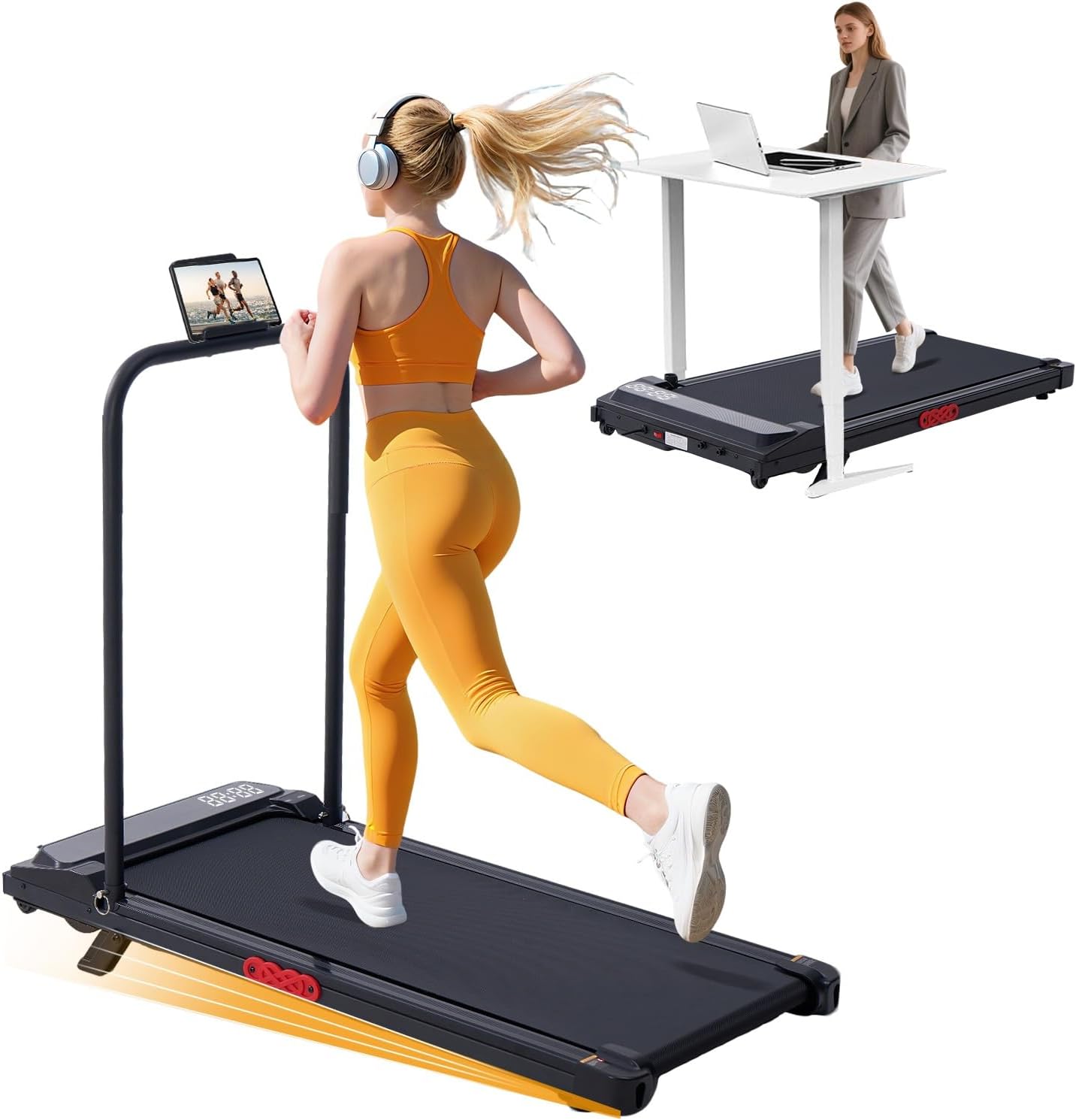
An apartment buyer tested this on thin floors with a downstairs neighbor in the picture. No complaints came up. That is a more useful data point than any spec sheet dB claim, and it is the reason this is the top pick on the page.
3.0 HP is stronger than average at this price. More headroom means the motor isn't straining at 2 to 3 mph walking speeds - it's loafing. Top speed is 7.6 mph, but the noise story here applies to walking speeds only (1 to 4 mph). At running speeds the acoustic situation is entirely different, and this is not a running treadmill in any meaningful sense.
Pull the handlebar off and it slides under a standing desk. Put it back on and it's a proper exercise machine. One device. At 350 lbs weight capacity, it ties the SUOUER as the highest in the set - notable for a sub-$110 machine. An 85-year-old post-hip-replacement buyer uses it daily and finds the stability adequate. That's a more demanding stress test than most buyers will ever subject it to.
We earn a commission on purchases via these links. It does not change the price you pay or our ranking.
Best for Standing Desk TREAFLOW Walking Pad
A buyer measured 60 dB at 2.2 mph. The most honest noise data on the page.
TREAFLOW Walking Pad
A buyer measured 60 dB at 2.2 mph. The most honest noise data on the page.
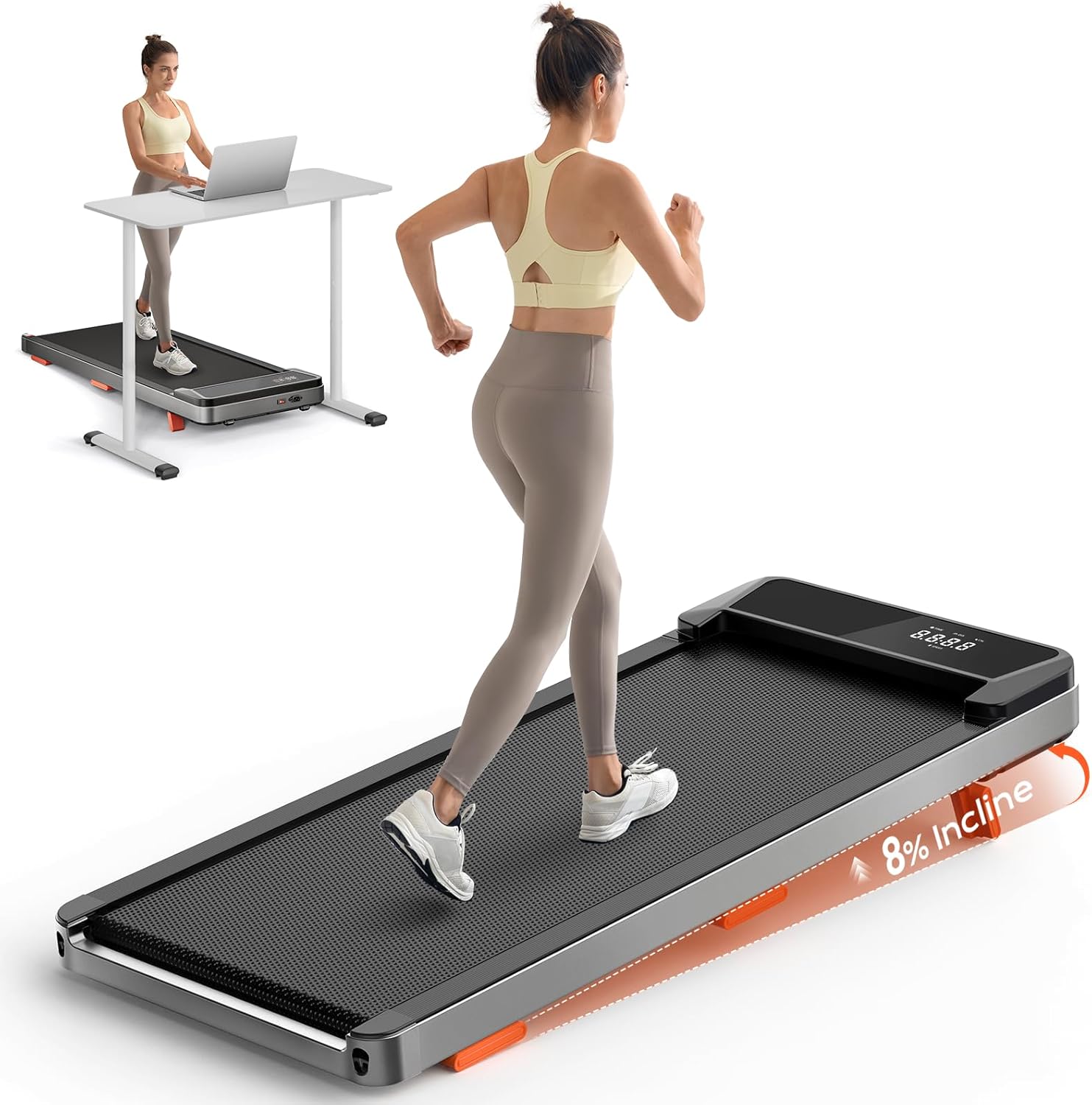
Start with the number that matters. A buyer measured around 60 dB on a phone dB meter while walking at 2.2 mph in a real home office setup. The manufacturer claims under 45 dB. That's a 15 dB gap, which on a logarithmic scale is significant. The buyer measurement is more useful for your actual buying decision than anything on the spec sheet.
Context for the measurement: the buyer is 6'1", 170 lbs, walking at normal work pace with the door closed. Lighter users at slower speeds will read lower. This is a reference point, not a ceiling. It's still far more honest than the manufacturer's idle-speed number.
- Door closed, headset mic: 60 dB typically doesn't get picked up. Non-issue for most calls.
- Door open, laptop mic: Audible on the other end. Close the door.
- Setup: Pre-assembled. Pull it out and walk. No installation required.
- Belt size: 37.5" x 15". On the short side for taller walkers with a longer stride.
- Break-in: First-day belt jerk is normal. Apply silicone lubricant and it resolves. Not a defect.
We earn a commission on purchases via these links. It does not change the price you pay or our ranking.
Viamotion Brushless Walking Pad
Buyers specifically confirm call-compatible use. That's the signal WFH walkers need.
Viamotion Brushless Walking Pad
Buyers specifically confirm call-compatible use. That's the signal WFH walkers need.
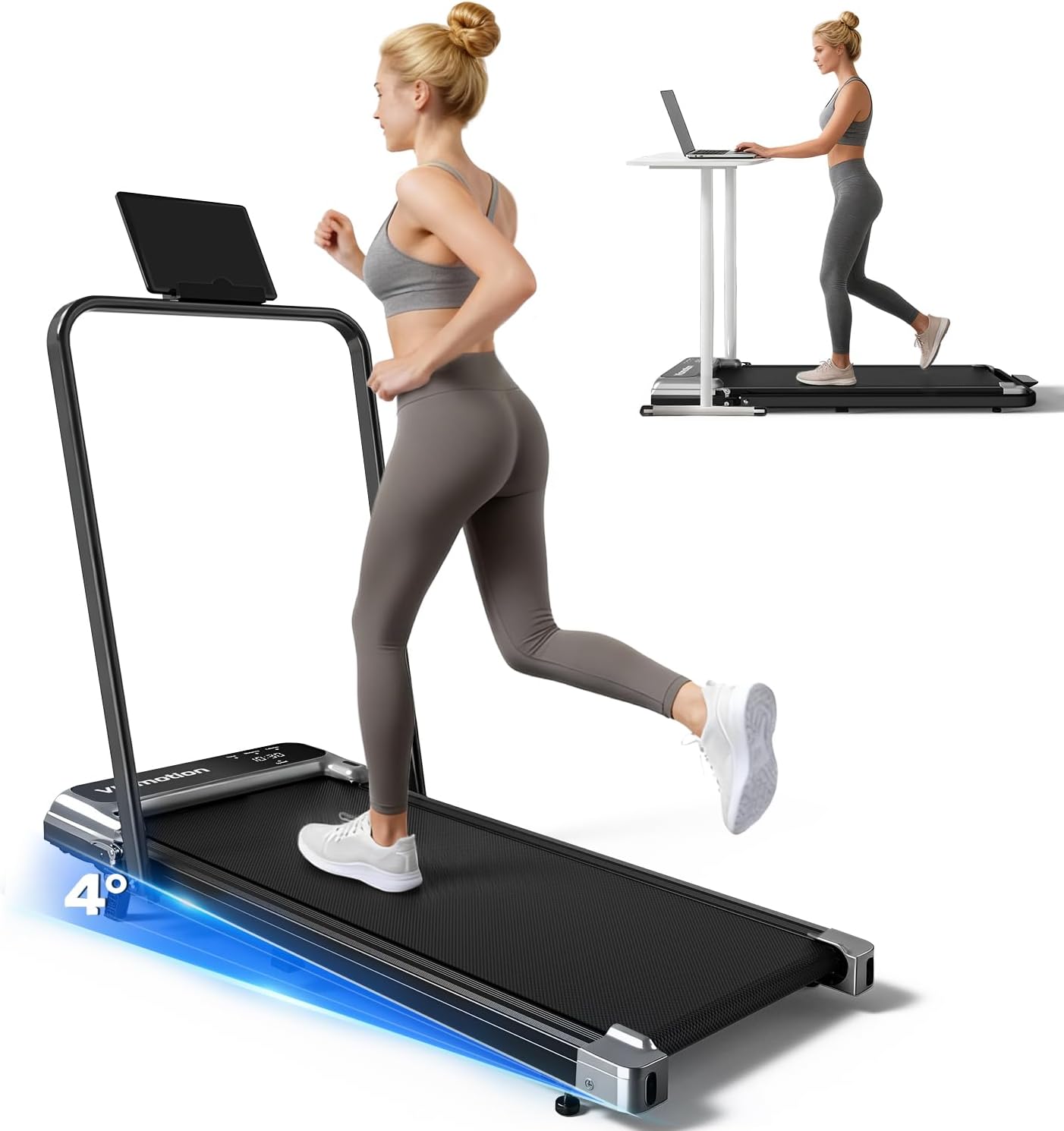
Buyers specifically report using this during calls without being heard. Not vague positive noise impressions - confirmed call-compatible use in a real home office. That's the precise claim WFH walkers are asking about, and it comes from people who actually ran it that way.
Brushless motor eliminates friction noise from motor brushes: typically 3 to 5 dB quieter than brushed motors at sustained low speeds, with less heat and longer service life as side benefits. Top speed caps at 3.8 mph. For desk walking at 2 to 3 mph, that's plenty of headroom. The cap is a non-issue for the use case this pad is designed for.
Fixed 4-degree incline (not adjustable), phone and tablet holder built into the handlebar, 265 lb weight capacity. That last spec is the lowest in the under-desk segment. Check it before anything else if you're on the heavier end.
We earn a commission on purchases via these links. It does not change the price you pay or our ranking.
Budget Options Under $120
Two sub-$120 walking pads with handles. The noise story is similar to the pricier options above, but belt length and weight capacity vary more at this price point.
Best Budget Pick SUOUER Walking Pad
$99.99 and buyers confirm it runs quietly. The 350 lb capacity is the standout spec at this price.
SUOUER Walking Pad
$99.99 and buyers confirm it runs quietly. The 350 lb capacity is the standout spec at this price.
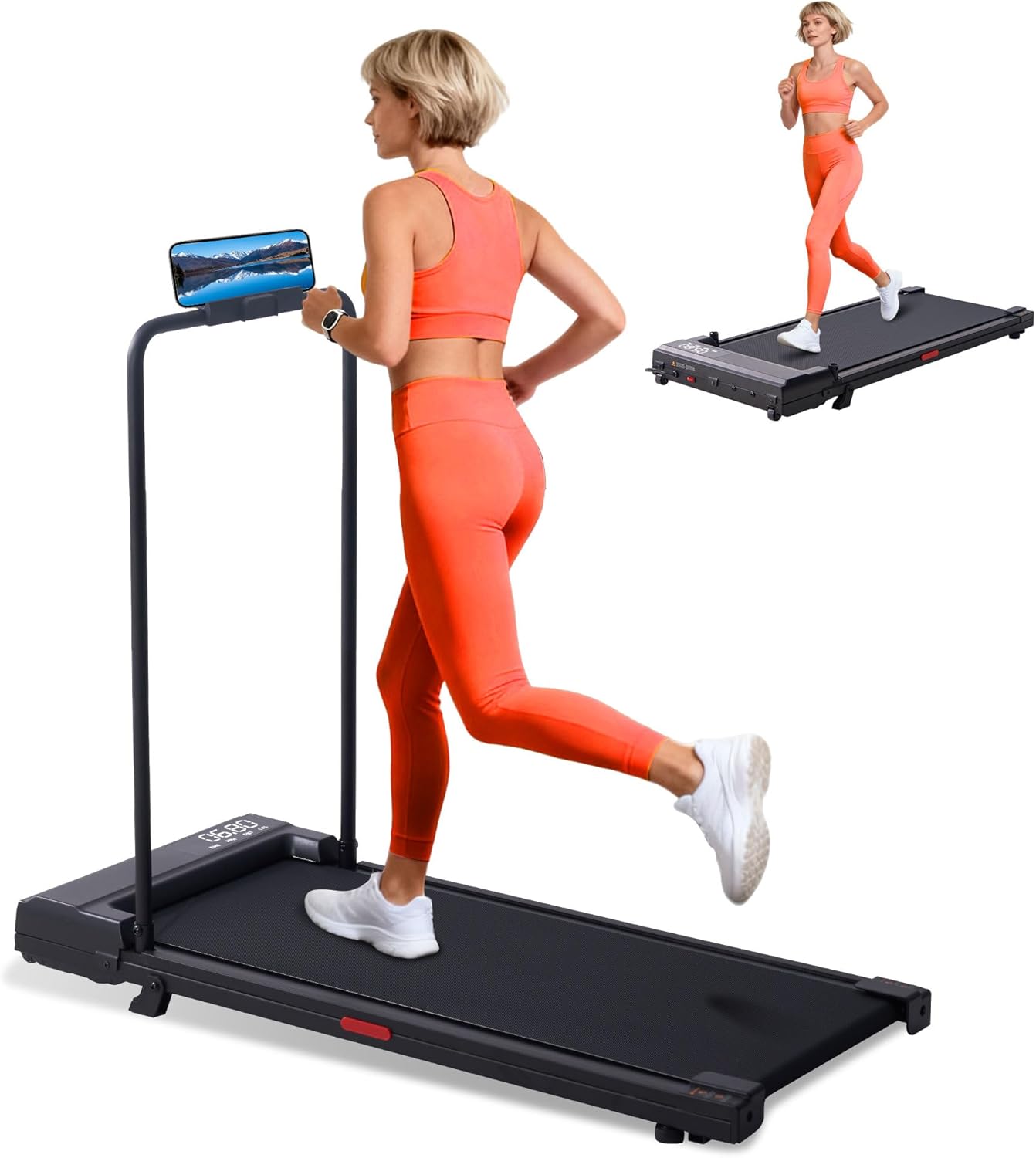
$99.99. Cheapest in the curated set. Before assuming budget means noise problems: buyers confirm it runs quietly. One owner at 285 lbs ran it daily without issues - at this price, build quality under sustained load is always the question, and that answers it.
Handles on: proper exercise machine. Handles off, slid under a desk: WFH setup. Same flexibility as the Kassadin, for $10 less. The 350 lb weight capacity on a $99 pad is unusual - most sub-$100 options cap below 300 lbs. Worth knowing if you're comparing on price alone.
One caveat: stride too long and you can drift toward the back of the belt. This isn't a full-length treadmill. Keep it to 1.5 to 2.5 mph and that's never an issue. Push it faster and you'll feel the belt length.
We earn a commission on purchases via these links. It does not change the price you pay or our ranking.
LONTEK 3-in-1 Foldable Treadmill
The only pad here with 15% incline. Noise at high incline is a genuine unknown.
LONTEK 3-in-1 Foldable Treadmill
The only pad here with 15% incline. Noise at high incline is a genuine unknown.
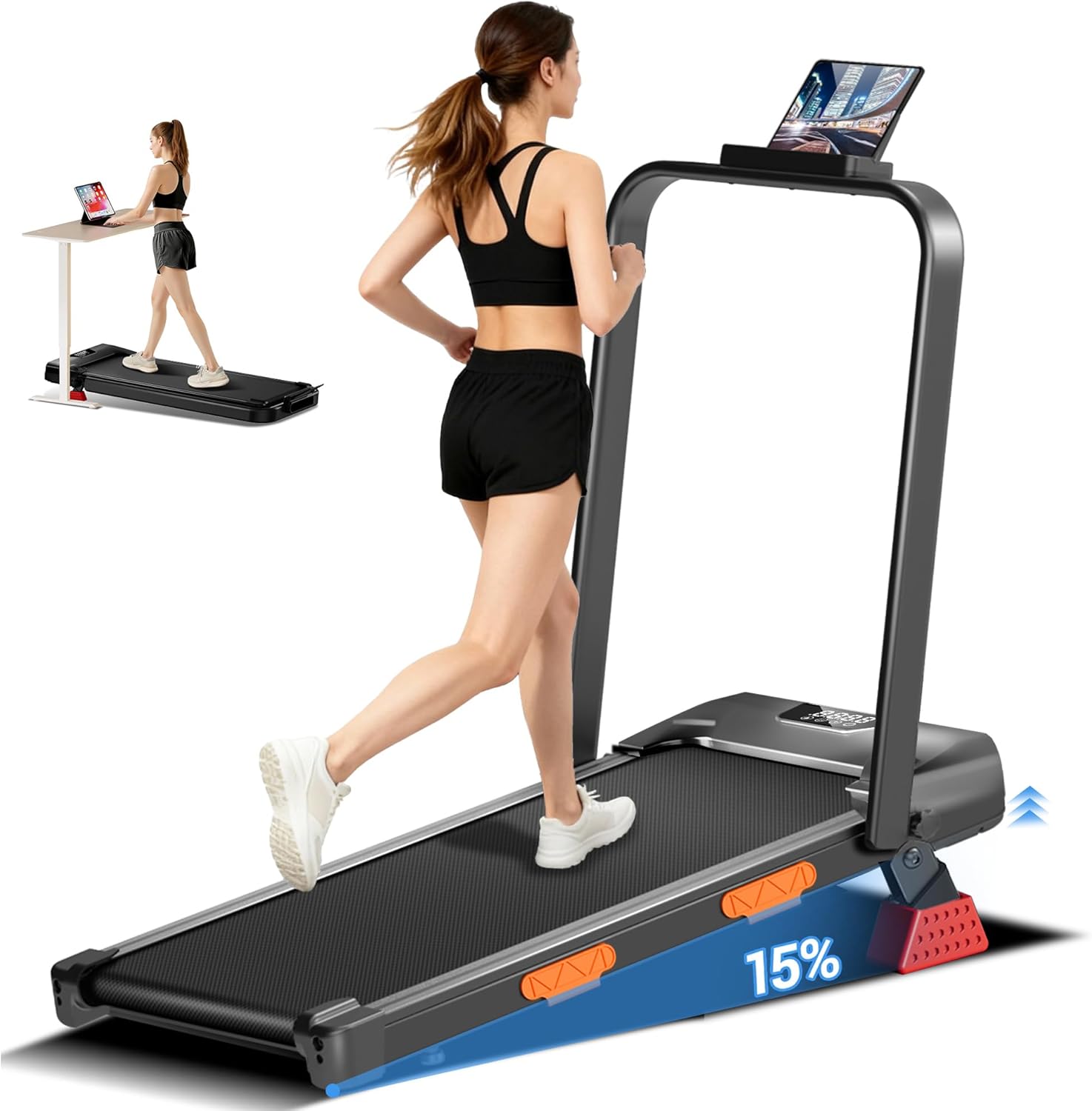
15% incline. No other product in this set goes above 8%. If incline walking for calorie burn is the actual goal, this is the only option in the comparison, and by a meaningful margin.
The noise caveat deserves direct treatment. The manufacturer claims under 45 dB. That claim almost certainly reflects flat, low-speed operation. At 15% incline under real load, the motor works harder. What it sounds like at full incline has not been quantified in buyer reports. It may hold the claim at low incline. Nobody knows what happens at 15% under load. This page won't pretend otherwise.
- Folds to 4.3 inches thick, stores under a standard bed
- 300 lb weight capacity
- Stable at slow speeds (a pregnant buyer used it daily and found it safe)
- Noise at low flat speed: consistent with other options in the category
- Noise at 15% incline under load: genuinely unknown
We earn a commission on purchases via these links. It does not change the price you pay or our ranking.
All Five Side by Side
The specs that actually matter for quiet home use. The TREAFLOW's 60 dB is a buyer's app-measured reading at 2.2 mph. All other dB figures are manufacturer claims measured at low or idle speed without a user on the belt.
| Product | dB | Use Case | Price | Badge | Verdict |
|---|---|---|---|---|---|
| SUOUER Walking Pad | 45 dB | Budget | $100 | Best Budget Pick | Cheapest in the set with the same noise profile as pricier options. |
| Viamotion Brushless Walking Pad | 45 dB | Under-Desk | $105 | Multiple buyers report it's call-safe in a home office. | |
| LONTEK 3-in-1 Foldable Treadmill | 45 dB | Incline | $105 | 15% incline is unique; noise at high incline is unknown territory. | |
| Kassadin Walking Pad Treadmill | 45 dB | Under-Desk | $110 | Quietest Overall | Apartment buyers confirm it stays quiet at walking speed. |
| TREAFLOW Walking Pad | 60 dB | Under-Desk | $146 | Best for Standing Desk | Buyer measured 60 dB at 2.2 mph. Fine with office door closed. |
What actually matters for quiet walking
The technical context you need to evaluate any walking pad claim, not just the five on this page.
The two-noise problem
Walking pad noise is actually two separate problems that get conflated constantly. Motor noise is airborne: the hum you hear in the room while you're walking. Footfall impact is structural: the vibration that travels through your floor into the ceiling of the apartment below. Different causes, different solutions.
A walking pad with a silent motor still transmits footfall to your downstairs neighbor. A quiet spec sheet number addresses motor noise and says nothing about floor impact. An apartment buyer who doesn't understand this distinction will be disappointed even with the quietest motor on the market. The solution to the downstairs problem is a high-density rubber mat, not a quieter motor.
The 45 dB claim
Every walking pad brand uses it. Every single one. It's an industry-wide measurement convention: tested at idle or near-idle speed without a user on the belt, in a controlled environment. At your actual walking pace of 2 to 2.5 mph with your weight on the belt, the real number is 10 to 20 dB higher. This isn't dishonesty, exactly. It's a measurement baseline that happens to be useless for the question you're actually asking: what does it sound like when I'm on it?
The buyer measurement on the TREAFLOW (around 60 dB at 2.2 mph, real-world) is the most useful data point on this page precisely because it was taken at actual walking conditions. That number won't transfer exactly to different bodies and different walking speeds, but it's a far more honest reference than anything the spec sheet provides.
Brushless motors: what they actually fix
Brushless motors eliminate brush-contact friction, typically 3 to 5 dB quieter than brushed motors at sustained low speeds. They also run cooler and tend to last longer. But "brushless" doesn't make a walking pad quiet by itself. The belt, the deck, and the rollers generate their own noise. A brushless motor in a lightweight plastic frame can be louder than a well-built brushed motor in a solid, properly damped enclosure. It's one input among several, not a guarantee.
The mat is not optional for apartments
A high-density rubber mat under the pad is the most effective single intervention for neighbor complaints. 6mm minimum thickness, 8 to 10mm is better. The mat absorbs vibration before it reaches the floor structure, addressing impact transmission specifically. It does nothing for motor noise in your room. Budget $25 to $40 for a decent anti-vibration mat. For apartment use, it is not optional.
Walking pads get louder over time
Belt dryness and bearing wear are the two main causes. A pad that's quiet at purchase can be noticeably louder after six months without maintenance. Silicone belt lubricant every one to three months extends the quiet operating window significantly. Budget models show bearing noise earlier than mid-range options. If the machine develops a grinding or whining pitch that wasn't there initially, bearing wear is the likely culprit and it won't resolve on its own.
dB reference scale
For context on what these numbers mean in a real room:
- 30 dB - quiet bedroom at night
- 40 dB - quiet library
- 50 dB - moderate rainfall, quiet office
- 55 dB - normal conversation at 3 feet
- 60 dB - normal conversation, slightly elevated
- 65 dB - laughter in a restaurant
A model that actually delivers 45 dB at walking speed is genuinely quiet. At 60 dB it's noticeable but not disruptive in a private office with the door closed. The distance between those two numbers sounds small and is not.
Frequently Asked Questions
Can my downstairs neighbor hear my walking pad?
Depends on two things: floor type and whether you're using a mat. Motor noise typically doesn't travel through floors. Footfall impact does. On hardwood without a mat, yes, they can probably hear it. With an 8 to 10mm rubber anti-vibration mat on carpet, probably not. The mat is the single most effective intervention for apartment use, and it costs $25 to $40.
Is a walking pad quiet enough for video calls?
Most models below 50 dB at functional walking pace fall below the pickup threshold for typical headsets. Viamotion buyers specifically confirmed call-compatible use in a home office. At 60 dB (the TREAFLOW's real-world reading), it depends on mic quality. Through a headset with the door closed, generally fine. Through a laptop mic with the door open, it will likely be audible on the other end.
Why do all walking pads claim "under 45 dB"?
It's an industry-wide measurement convention taken at idle or near-idle speed without a user on the belt. At your actual walking pace the real number is higher. Not dishonest, exactly. Just a useless baseline for the question you're actually asking. Buyer reports taken at real walking speeds are far more useful than anything on the spec sheet.
Do walking pads get louder over time?
Yes. Belt dryness (fix: silicone lubricant every one to three months) and bearing wear (harder to fix, shows up earlier in budget models) are the two causes. Lubrication is the main maintenance task and genuinely extends the quiet operating window. A grinding sound that wasn't there at purchase is bearing wear and won't resolve on its own.
Manual vs electric walking pad: which is quieter?
Manual pads have no motor noise. The only sound is your footfalls. Electric pads add motor hum to that. If silence is the priority, manual wins outright. The trade-off: manual pads require more physical effort, which limits long work sessions and makes them impractical for the low-intensity walking-while-working use case most WFH buyers actually want. Most people in that situation land on electric.