Outdoor Fans · 2026 edition
Quietest outdoor fans: the myths are costing you money
Four myths are costing outdoor fan buyers money right now. Cordless fans are underpowered. Quiet fans can't move serious air. No published dB spec means a fan is too loud to admit it. Ceiling fans only belong indoors. Each of these is wrong, and the right purchase depends on knowing why. This page covers the quietest outdoor fans we found data on, and works through each myth with the actual evidence.
We looked at the Shark FlexBreeze FA202 (45 dB, cordless), the FUGOO 24-inch brushless DC industrial fan (50 dB), the addlon IP65 plug-in hanging fan, and the Rowenta Extreme Outdoor VU4510. Data confidence varies significantly by product, and we say so at every point where the signal is thin. Below: the myth-busting breakdown by segment, then a buying guide on what outdoor dB specs actually mean, and a full comparison table.
Cordless Patio Fans
Battery power solves the extension-cord problem on decks and patios. The real question is whether the runtime holds up when it's actually hot enough to need a fan.
Myth: cordless fans are underpowered toys
Quietest Overall Shark FlexBreeze FA202
45 dB cordless patio fan with genuine quiet reviews and real battery runtime
Shark FlexBreeze FA202
45 dB cordless patio fan with genuine quiet reviews and real battery runtime
45 dB with buyer confirmation across multiple speed settings, not just low. That distinction is what separates a real spec from a marketing number.
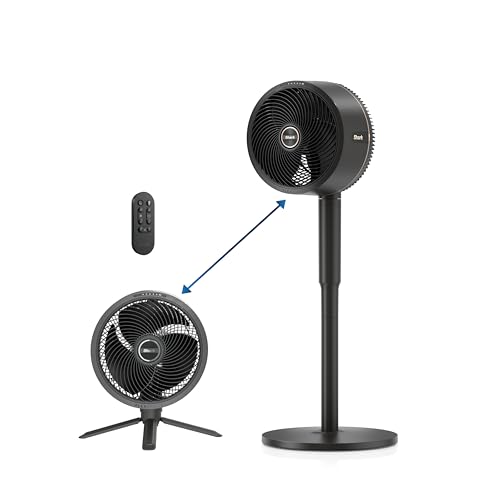
Cordless fans were underpowered ten years ago. That was before brushless DC motors moved from power tools to consumer fans. The Shark FlexBreeze came back with 45 dB and enough airflow to cool a covered porch. That's not "pretty good for cordless." That's just good.
The 45 dB claim is notable because it holds up to buyer scrutiny, which most outdoor fan noise claims don't. Buyers consistently confirm quiet operation at multiple speed settings, not just low. Some report running it indoors overnight without noticing the sound. The verification rate here is higher than anything else on this page.
The actual reason most buyers choose this fan is the cordless angle, not the noise level. No extension cord on a deck. No trip hazard across patio pavers. The quiet is the discovery, not the hook. The 2-in-1 design matters specifically outdoors: tabletop mode works on a deck railing, pedestal mode works on a patio. One fan, two setups, no outlet required.
Battery truth: the 24-hour runtime figure is a minimum-speed theoretical maximum. Outdoors in summer heat, medium speed is the realistic setting to stay comfortable. Buyers using it at medium for afternoon and evening patio sessions find the runtime workable. Buyers expecting all-day maximum power will be disappointed. Set that expectation before ordering.
One more thing upfront: the InstaCool misting attachment is sold separately, and it requires a water source nearby. That partially defeats the cordless freedom that makes this fan worth buying in the first place. If misting is the reason you're shopping, confirm the accessory cost and your water access situation before committing.
We earn a commission on purchases via these links. It does not change the price you pay or our ranking.
High-Power Outdoor Fans for Garages and Workshops
Moving 5000 CFM without rattling the walls is what brushless DC motors do differently. Not quiet like a bedroom, quiet for the airflow class. That distinction matters.
Myth: quiet fans can't move serious air
Best for Large Spaces FUGOO 24" Industrial Pedestal Fan
Brushless DC motor earns its quiet claims; right pick for garages and warehouses
FUGOO 24" Industrial Pedestal Fan
Brushless DC motor earns its quiet claims; right pick for garages and warehouses
50 dB for 5,000 CFM. At that ratio, the BLDC motor is doing something conventional AC designs genuinely cannot match at moderate speed.
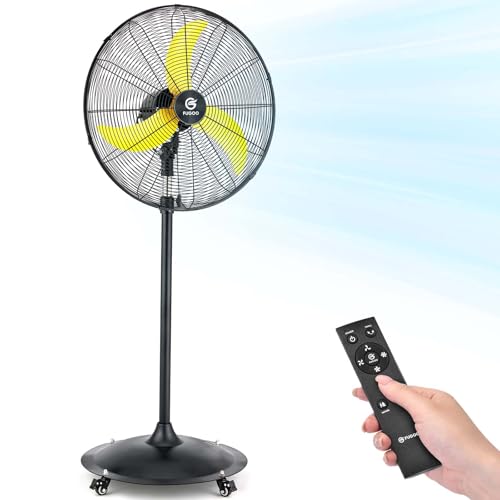
The physics here are real. Brushless DC motors operate at genuine variable RPM, which eliminates the 60 Hz electrical hum that conventional AC fans produce at every speed setting. At moderate airflow, the quiet advantage is largest. Early buyers comparing it to traditional industrial fans describe being able to hold a workshop conversation near it at medium speed. That is the brushless DC story in one sentence.
IP rating reality. IP54 means sheltered outdoor use is fine, not rain exposure. A garage with open doors works. An open pergola during a rainstorm is the wrong product. Know the difference before positioning it somewhere it cannot be moved.
Remote pairing. At least one early buyer reports the remote failing to pair correctly on first setup. The fan operates fully without the remote; the remote is a convenience, not a core function. This is a possible first-use frustration, not a defect. Flag it internally before your initial setup session.
At high speed on smooth concrete, the fan moves itself. This is physics: 5,000 CFM of thrust reaction pushes the fan backward. Locking the wheels before running at high speed is step one. Early buyers note this; it is not a product problem, it is aerodynamics at scale.
"Whisper-quiet" is in the product name. It is marketing. 50 dB is quiet for industrial class, not quiet by bedroom standards. The right framing: for a garage or workshop where you need serious airflow without raising your voice to a co-worker at medium speed, this fan earns its billing. For a bedroom patio where a 45 dB cordless fan would do, look at the Shark instead.
Data confidence caveat: this fan has limited buyer history. Early-buyer reports only. The BLDC motor physics are well-established, but the product-specific validation is thinner than any of us would prefer. Treat the recommendation as "interesting and promising" rather than "thoroughly verified."
We earn a commission on purchases via these links. It does not change the price you pay or our ranking.
Mounted and Traditional Outdoor Fans
Hanging fans solve the floor-space problem under a gazebo or pergola. Traditional pedestal designs round out the category for buyers who want proven outdoor reliability.
Two different products, two different noise stories. The addlon has thin data but strong IP protection and a renter-friendly design. The Rowenta has the most buyer feedback of any fan on this page, but the noise picture is honestly mixed.
Myths: no published dB spec means too loud to admit it; and ceiling fans require hardwiring to belong outdoors
addlon Plug-in Hanging Ceiling Fan
IP65 gazebo and carport fan; no dB number, quiet buyer reports, renter-friendly install
addlon Plug-in Hanging Ceiling Fan
IP65 gazebo and carport fan; no dB number, quiet buyer reports, renter-friendly install
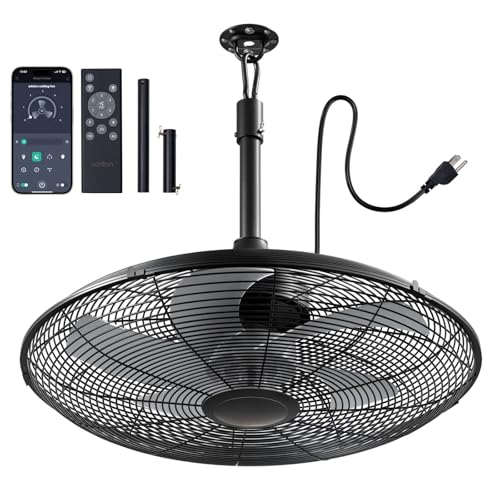
The actual differentiator here is not noise; it's IP65. That's a dust-tight enclosure plus resistance to water jets from any direction: meaningfully better than most outdoor fans, including the FUGOO (IP54). For a covered patio that gets sideways rain during storms, IP65 is the spec that matters when the weather turns.
- Renter-friendly installation: plug into an outlet, hang on a hook, take it down when you move. No electrician required, no junction box, no hardwiring. That is the real myth-bust here. Outdoor ceiling fans do not require hardwiring when the design accounts for it.
- Actual buyer use cases: chicken runs, gazebos, covered carports. Spaces where a floor fan takes up scarce room and a wired ceiling fan requires a licensed electrician. This is the product those buyers were waiting for.
No independent dB measurement exists for this fan. Buyer reports suggest it is quiet enough to hold a conversation underneath at mid speed. That is the honest framing; it is not a measurement. If you need a verified number before committing, this is the wrong product. If IP65 and cord-and-hook installation solve a specific problem in your setup, the fan earns its place on this page.
Mounting note: a solid anchor point is required. Drywall alone outdoors will not hold the load. Wood framing or an exposed ceiling joist is the right approach. Confirm your anchor before ordering.
We earn a commission on purchases via these links. It does not change the price you pay or our ranking.
Rowenta Extreme Outdoor VU4510
Best-validated set in this category; quiet at low-mid speed, louder at high
Rowenta Extreme Outdoor VU4510
Best-validated set in this category; quiet at low-mid speed, louder at high
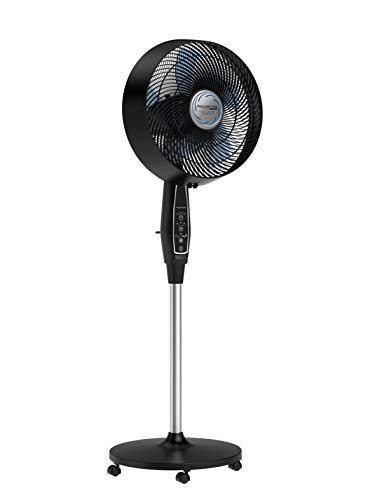
Rowenta's reputation for quiet indoor fans is a trap when you're shopping for this one. Buyers who already own Rowenta bedroom fans come in expecting similar quietness. They should not. Outdoor fans move more air; more air means more aerodynamic noise. This fan is quieter than a generic outdoor pedestal, not as quiet as a Rowenta bedroom model. Internalize that before reading anything else here.
The "natural" wind mode is a genuine usability problem. Every power cycle starts in wave mode: random speed variations including near-off pauses, cycling through a simulated breeze pattern. Getting steady airflow requires pressing the mode button after every restart. Buyers who know this going in handle it fine. Buyers who don't find it maddening. Now you know.
Two things this fan gets right. First, the GFCI plug is built into the cord. That is a meaningful safety feature for outdoor electrical appliances; more manufacturers should include it, and Rowenta did. Second, the buyer pool here is larger than the other three fans on this page combined. The noise signal that emerges from that feedback is the most reliable on this page: quiet at low to mid speed, noticeably louder at high speed on hot days.
IR remote range is poor. Buyers report needing to aim directly at the receiver to get a response. This shows up across multiple independent accounts; it is not an edge case. If remote control is something you'll rely on daily, that limitation is worth knowing before purchase.
Rowenta does not publish a dB spec for this fan. The buyer evidence is more useful than a manufacturer number from an anechoic chamber would be anyway. The honest summary: workable noise at the speeds most people actually use outdoors.
We earn a commission on purchases via these links. It does not change the price you pay or our ranking.
What outdoor fan specs actually mean
The specs look the same as indoor fan specs. The context is completely different. Here is what changes when you take a fan outside.
The outdoor noise context shift
Suburban outdoor ambient noise runs 45 to 60 dB. Traffic, wind, birds, your neighbor's lawnmower. That background masks fan noise in a way a quiet living room never does. A fan at 50 dB in a 55 dB ambient environment is effectively inaudible to your ears. The same fan in a quiet bedroom at night would be clearly present.
Concrete numbers: the Shark FlexBreeze at 45 dB in a 55 dB suburban ambient is barely noticeable. The FUGOO at 50 dB in the same setting is present but not intrusive. The question "is this fan quiet?" only makes sense with "compared to what, and where?" Indoor dB expectations don't transfer to outdoor use.
AC vs brushless DC: the motor noise physics
Conventional AC fans produce two types of noise: a 60 Hz electrical hum from the motor, and cogging noise at reduced speeds (the motor fighting reduced voltage). Brushless DC motors eliminate both. BLDC fans operate at genuine variable RPM with no hum and no cogging. At partial speed, the acoustic difference is large.
The catch: at maximum CFM, aerodynamic noise from the blade sweep dominates both motor types. The BLDC advantage narrows significantly at full power. "70% quieter" claims are marketing; the realistic BLDC advantage at equivalent CFM is 5 to 12 dB. That range is still meaningful. On the logarithmic dB scale, 10 dB is roughly perceived as twice as quiet.
IP ratings: what they actually cover
IP54 is splash protection. Not rain. Sheltered outdoor use only. A garage with the doors open: fine. An open pergola during a rainstorm: wrong product.
IP65 adds dust-tight construction plus resistance to water jets from any direction. Covered patios that get sideways rain in storms fall within IP65's coverage. The step up from IP54 to IP65 is meaningful for outdoor applications that see real weather.
"Weather resistant" without an IP number is an untestable marketing claim. Treat it accordingly. Worth noting separately: a GFCI plug is a different kind of protection from the IP rating. The Rowenta includes one. Not all outdoor fans do.
Outdoor dB context scale
CFM without noise context is meaningless
The wrong question: "what's the quietest outdoor fan?" The right question: "what's the quietest fan that moves enough air for my space?" A 35 dB fan at 300 CFM is useless on a hot patio. Match CFM to space before evaluating noise.
Rough guidelines: a small porch under 150 square feet needs 1,500 to 2,500 CFM. A standard patio needs 2,500 to 4,000 CFM. A garage or workshop needs 4,000 to 7,000 CFM. If a fan doesn't move enough air for your space, its noise rating is irrelevant.
Cordless runtime reality
"24-hour battery" is a minimum-speed theoretical figure, not a real-world guarantee. At medium speed outdoors in summer heat, realistic runtime is 4 to 8 hours. Cordless fans are the right choice for patio sessions, not all-day sustained workshop duty. For continuous high-CFM use, a corded fan is the practical answer.
Frequently Asked Questions
What's a good dB level for a quiet outdoor fan?
Under 50 dB is the target for patio use where conversation matters. For garage or workshop use, 50 to 58 dB is the realistic quiet range for the CFM class you need. Below 40 dB in a meaningful-CFM outdoor fan doesn't exist: aerodynamics set a floor. The outdoor ambient context matters too. A 50 dB fan in a 55 dB suburban setting is barely perceptible.
Does a brushless DC outdoor fan get louder as it heats up in summer?
No. BLDC motors don't exhibit the thermal noise progression that AC motors do. AC fans can develop bearing noise as they heat up over seasons of use. BLDC motors run cooler, maintain more consistent acoustic performance, and don't develop that progression. Worth knowing for buyers in hot climates running fans all summer.
Is an IP54 fan safe to use in rain?
No. IP54 is splash protection only. Sheltered use in light moisture is fine; rain exposure is not. IP65 is the minimum rating for any use case involving rain. Also worth knowing: the IP rating covers the housing. A GFCI plug (Rowenta has one, most fans don't) is a separate safety layer for the electrical connection. Both matter outdoors.
Why does my outdoor pedestal fan roll away at high speed?
Thrust reaction. Moving 5,000 CFM of air generates a backward force on the fan's base. At high speed on smooth concrete, that force is enough to move the fan. Lock the wheels before running at high speed. Buy a fan with positive-locking wheels if high-speed outdoor use is a regular need. This is physics, not a product defect.
Should I skip an outdoor fan that has no published dB rating?
Not automatically. Many legitimate brands don't publish outdoor fan dB specs. A spec-less fan from an established brand with substantial buyer feedback is often better-validated than a cheap fan with a manufacturer dB claim and eight reviews. Look for buyer volume and noise-specific feedback patterns. The Rowenta on this page has no published spec and more useful noise signal than half the fans that publish one.
All 4 Picks: By Noise Level
Fans with verified dB specs listed first, then fans with buyer-evidence noise data only. Each product name links to its full writeup above.
| Product | dB | Fan Type | Price | Badge | Verdict |
|---|---|---|---|---|---|
| Shark FlexBreeze | 45 dB | Cordless Pedestal | $150 | Quietest Overall | Quietest cordless patio fan with verified buyer data |
| FUGOO 24" Whisper | 50 dB | Industrial Pedestal | $259 | Best for Large Spaces | BLDC motor delivers quiet for 5000 CFM industrial output |
| addlon Outdoor Fans for Patios | No spec | Plug-in Hanging Fan | $80 | IP65 hanging fan; no dB spec but quiet buyer reports | |
| Rowenta | No spec | Outdoor Pedestal | $196 | Most buyer feedback in this set; mixed noise at high speed |