Chainsaws · 2026 edition
Quietest chainsaws for suburban and home use 2026
Gas chainsaws at full throttle hit around 110 dB. That's a jet engine comparison, not hyperbole. Battery chainsaws run 85-95 dB. The math: 20 dB less means roughly four times quieter to your ears. That's the difference between your neighbor waving from the driveway and calling the city. For the quietest chainsaw that can still handle real work, battery electric is the only answer.
We read buyer feedback from thousands of electric chainsaws, focusing specifically on the people who mentioned noise. Eight saws made the cut. All battery or corded electric. No gas. The use case ranges from 6-inch pruning saws that one buyer said required no hearing protection, to a 12-inch DeWalt-battery saw someone uses at midnight.
All 8 Picks: Sorted by Use Case
Every product we recommend is here, with its dBSkeptic rating and a one-sentence verdict. This table is the fastest way to find your category.
| Product | dB | Power | Price | Badge | Verdict |
|---|---|---|---|---|---|
| SEESII Electric Chainsaw Cordless 12 | Quiet | Battery 12" | $89 | Best Suburban Pick | 1200W brushless. The most-reviewed electric chainsaw in this pool. |
| Tietoc Chainsaw 6 Inch Mini Electric Chainsaw Cordless Battery Powered | Quietest | Battery 6" | $30 | Best Budget Pick | Under $30. Owners say no hearing protection needed. |
| Brushless Electric Chainsaw 12" Cordless Tool Only for Dewalt 20V/60V Battery with Auto Oiler & Security Lock | Quiet | Battery 12" | $53 | Best DeWalt Pick | Uses DeWalt 20V/60V. Midnight tree work verified by one owner. |
| BLACK+DECKER 20V MAX Electric Chainsaw | Quiet | Battery 10" | $149 | Trusted brand, mixed battery life. Light suburban use only. | |
| Seesii Mini Chainsaw | Quietest | Battery 6" | $34 | Two batteries, 80-100 min runtime. Lightest saw on the page. | |
| 14 Inch Brushless Electric Chainsaw Cordless for Milwaukee M18 18V Battery | Quiet | Battery 14" | $112 | Milwaukee M18 ecosystem. 14-inch bar, two-speed operation. | |
| Electric Chainsaw Cordless | Average | Battery 16" | $180 | Largest bar. Manufacturer quiet claims, no buyer validation. | |
| Sun Joe SWJ599E 14 | Quiet | Corded 14" | $69 | Corded electric. Unlimited runtime, known chain durability issue. |
Suburban pruning: neighbors are watching
Battery chainsaws were built for this. You get the cutting power to clear real branches without the gas-engine racket that carries three houses down. Electric noise at 85-90 dB is audible - it's not silent - but it reads differently. No exhaust smell, no starting ritual, no idle. Most neighbors can't tell you're using a chainsaw at all.
Best Suburban Pick SEESII 12-inch Brushless Cordless Chainsaw
1200W brushless motor with extensive buyer validation. If you want one saw that handles branch work without the gas circus, this is it.
SEESII 12-inch Brushless Cordless Chainsaw
1200W brushless motor with extensive buyer validation. If you want one saw that handles branch work without the gas circus, this is it.
Buyers who switched from gas describe the noise difference as dramatic, like switching from a lawnmower to a push mower.
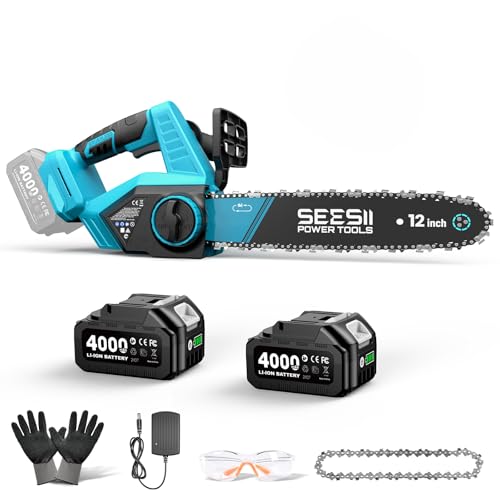
Buyers who switched from gas describe the noise difference the same way: one compared it to going from a lawnmower to a push mower. Another mentioned forgetting they left the saw running. No direct decibel lab measurement exists for this saw - what we have instead is consistent buyer consensus across a large review pool.
Why the brushless motor matters: brushless designs reduce commutation noise compared to brushed motors, run more efficiently, generate less heat. This is not marketing language. The 1200W rating puts it in the upper range for cordless saws. The 12-inch bar covers most suburban tree work - branches, small limbs, storm cleanup.
Practical details worth noting:
- Tool-free chain tension: no wrenches, no hunting for the right socket size.
- 4.0Ah battery with charge indicator: no surprise mid-cut shutdowns.
- 12-inch Oregon bar: genuine cutting capacity, not a toy.
This is the safe pick for someone who wants one electric saw that works for suburban branch work without overthinking it.
We earn a commission on purchases via these links. It does not change the price you pay or our ranking.
BLACK+DECKER 20V MAX 10-inch Cordless Chainsaw
BLACK+DECKER 20V MAX 10-inch Cordless Chainsaw
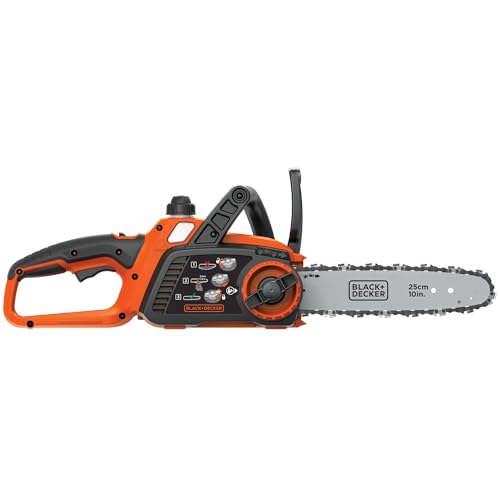
BLACK+DECKER carries brand weight that generic electric chainsaws don't. The multi-year buyer data pool is deep enough to separate actual quiet performance from manufacturer claims. What that data shows: genuinely quieter than gas, but with real constraints you need to know upfront.
The 10-inch bar is the limit. This handles branches up to about 9 inches diameter. Not for felling trees. Don't let brand trust tempt you into buying this expecting more than it delivers. Light suburban branch work: fine. Mature trees or extended cutting sessions: you need more bar.
Battery life is genuinely mixed. Light pruning work gets through a session on one charge. Dense hardwood for an hour straight might need a mid-session recharge. The 7.2 lb weight is a real advantage for seniors or anyone who fatigues quickly. If you already own BLACK+DECKER 20V tools, the battery compatibility is the clincher.
We earn a commission on purchases via these links. It does not change the price you pay or our ranking.
Compact one-handers: branch trimming without the full-saw commitment
Six-inch mini chainsaws are their own category now. One-handed, 2-3 pounds, no cord, genuinely quiet. They won't fell a mature tree - a 6-inch bar physically can't. But for trimming shrubs, clearing brush, cutting 3-4 inch branches all afternoon, they're the right tool and the quietest chainsaws on this page.
Best Budget Pick Tietoc 6-inch Mini Chainsaw
Under $30. Buyers specifically mention not needing hearing protection. We can't verify dB, but that's a meaningful signal.
Tietoc 6-inch Mini Chainsaw
Under $30. Buyers specifically mention not needing hearing protection. We can't verify dB, but that's a meaningful signal.
At $29.99, buyers who mention it's quiet enough to not need ear protection provide the strongest noise signal in this entire product set.
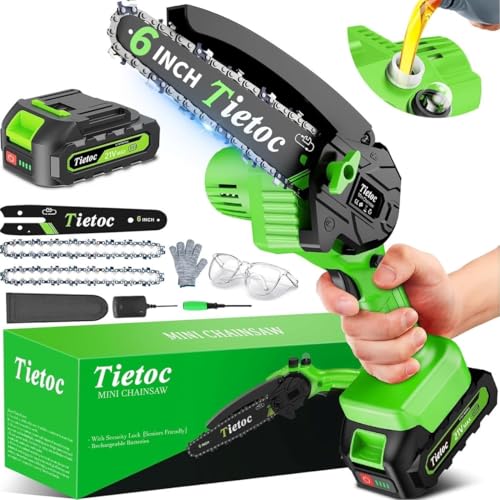
At $29.99, this is almost impulse-purchase territory. The noise story: buyers specifically say it's quiet enough to skip hearing protection. We can't verify third-party dB numbers, but that buyer signal is the strongest in this entire product set. At this price and noise profile, think of it as semi-disposable - which is actually reasonable for occasional-use pruning.
Use case boundary: 6-inch bar cuts branches up to 6 inches diameter. That's the physical limit. 880W motor, 3.3 lbs, one-handed operation. Durability is honestly mixed - plastic parts have broken during use for some buyers. This is a $30 saw. Calibrate expectations accordingly.
What they got right even at this price: security lock and safety baffles that show the safety design is serious. Extended pruning sessions at 3.3 lbs are far less fatiguing than wrestling with a full-size saw. Value is real. Durability ceiling is real. Both facts matter.
We earn a commission on purchases via these links. It does not change the price you pay or our ranking.
Seesii 6-inch Mini Chainsaw (2-Battery Kit)
Seesii 6-inch Mini Chainsaw (2-Battery Kit)
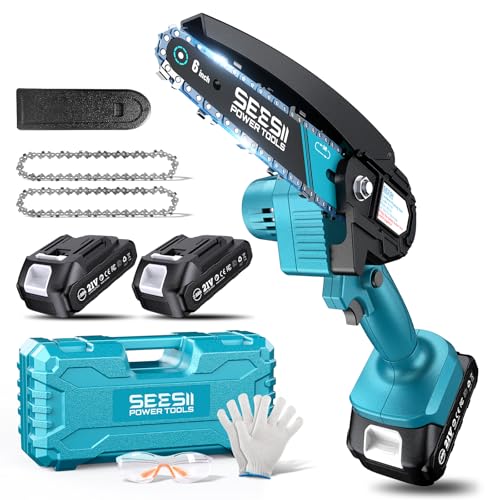
Two 2000mAh batteries included - that's the differentiator from Tietoc. Pruning sessions that run 80-100 minutes won't leave you waiting for a recharge. Same use case, more runtime baked into the package.
This is the lightest saw on this page at 2.7 lbs. That weight difference is meaningful for seniors, people with arthritis, anyone holding a one-handed saw for extended periods. The 900W motor and 30ft/s chain speed match Tietoc's performance envelope.
Product copy claims "low operating noise that won't disturb neighbors." Honest translation: same noise category as other mini saws (electric motor hum, no combustion exhaust). Plastic storage case included. Direct comparison: step up if you need the runtime; stay with Tietoc if budget matters more.
We earn a commission on purchases via these links. It does not change the price you pay or our ranking.
Storm cleanup and firewood: when you need more bar
Bigger jobs need bigger tools. Storm debris, downed limbs over 6 inches diameter, firewood splitting - these push past what a mini saw can handle. The three saws here are 12-16 inch battery models designed for ecosystem integration or standalone extended work. Still dramatically quieter than gas, which matters when you're cutting for two hours.
Best DeWalt Pick FXAFXA 12-inch Chainsaw (DeWalt 20V/60V)
Tool-only at $52.79. If you have DeWalt batteries, you're getting a brushless 12-inch chainsaw for less than two tanks of gas.
FXAFXA 12-inch Chainsaw (DeWalt 20V/60V)
Tool-only at $52.79. If you have DeWalt batteries, you're getting a brushless 12-inch chainsaw for less than two tanks of gas.
One buyer who owns three gas chainsaws calls this the quiet electric baby chainsaw and mentions using it when nobody should know you're cutting trees.
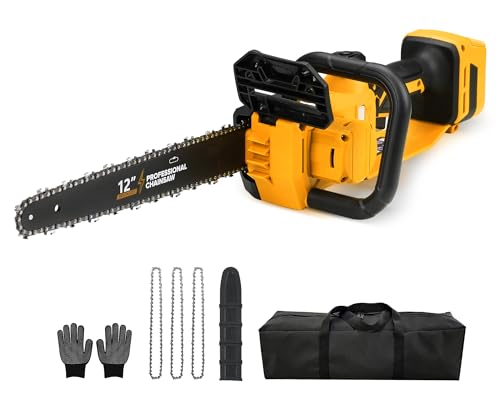
If you already own DeWalt 20V/60V tools (DCB204, 205, 206, DCB606 batteries), this is a $52.79 chainsaw. Tool-only pricing. No new battery ecosystem to commit to. If you're starting from scratch, add the DeWalt battery cost - but DeWalt 20V/60V is among the most common residential tool battery platforms, so the investment pays forward.
The noise testimony here is unusually specific. One buyer who owns three gas chainsaws calls this the "quiet electric baby chainsaw" and mentions using it when nobody should know you're cutting trees. Another buyer: used at midnight. That's the strongest noise endorsement on any 12-inch saw on this page.
Assembly gotcha: the chain adjuster needs care on first setup. Multiple buyers flagged this. Not a dealbreaker, but worth knowing before you unbox it. 1000W pure copper brushless motor, 13m/s chain speed, two 12-inch chains and storage bag included. Enthusiastic for DeWalt ecosystem buyers, honest about the assembly quirk.
We earn a commission on purchases via these links. It does not change the price you pay or our ranking.
APEXPOWER 14-inch Chainsaw (Milwaukee M18)
APEXPOWER 14-inch Chainsaw (Milwaukee M18)
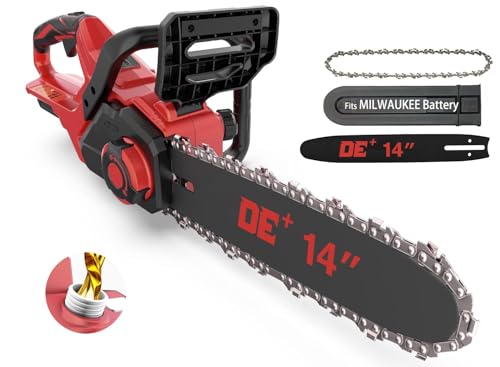
Same ecosystem logic as the FXAFXA, but for Milwaukee M18 users. The meaningful upgrade: 14-inch bar reaches trunk diameters up to 12.6 inches, versus FXAFXA's 12-inch limit. For firewood from bigger logs, that 2-inch bar difference is the deciding factor.
Two-speed operation: 18ft/s for precision pruning, 22ft/s for heavy cutting. This matches saw behavior to task instead of running max RPM constantly - which is both louder and drains battery faster. Brushless motor with chain brake (instant-stop safety).
No dedicated noise reviews in the buyer data, but brushless electric means same noise floor as other battery saws here. Solid positive performance feedback across the review pool. This is the Milwaukee version of the tool ecosystem play.
We earn a commission on purchases via these links. It does not change the price you pay or our ranking.
AVADA 16-inch Brushless Chainsaw (42V, 2 batteries)
AVADA 16-inch Brushless Chainsaw (42V, 2 batteries)
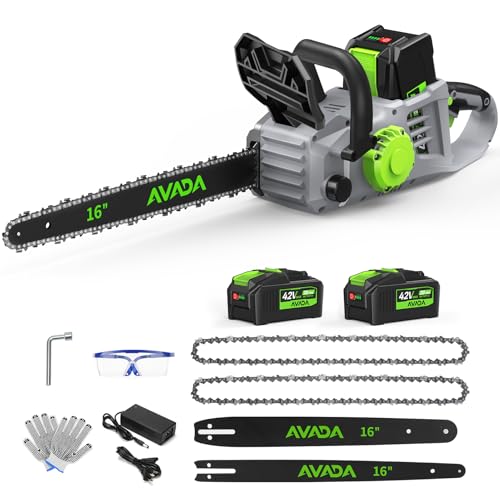
The largest bar on this page: 16 inches for firewood from mature logs, storm cleanup involving thick limbs. Two 42V batteries plus fast charger in the box. Dual batteries mean extended runtime for sustained cutting - no mid-session charge breaks.
"Low noise" appears in the product title and listing. Honest assessment: that's manufacturer language with no buyer validation. The review pool is thin - only 47 reviews, none specifically about noise. At $179.99, this is the most expensive saw on this page, competing price-wise with mid-range gas saws.
Claimed specs: 12,000 RPM, 200 cuts per charge. Moderate data to validate those numbers. The use case fit (large-diameter cutting) is solid. The "quiet" positioning is unverified manufacturer copy. Know that going in.
We earn a commission on purchases via these links. It does not change the price you pay or our ranking.
Corded electric: unlimited runtime, no battery math
One corded saw on this page. No battery anxiety, no charging time, runs as long as the extension cord reaches. The tradeoff is the cord itself - you're tethered to an outlet, which limits how far from the house you can work.
Sun Joe SWJ599E 14-inch Electric Chainsaw
Sun Joe SWJ599E 14-inch Electric Chainsaw
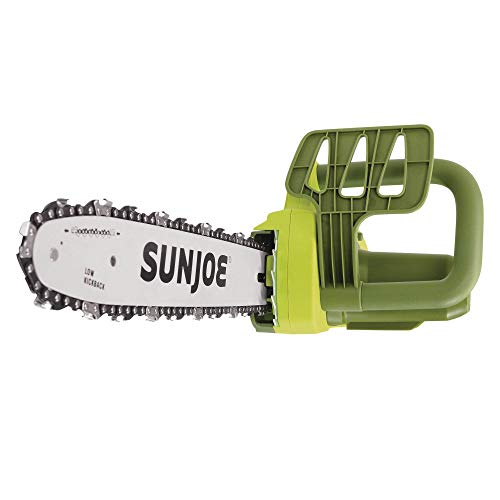
Nine amps, corded electric, 14-inch bar. One buyer used this indoors to dismantle a TV cabinet they couldn't move. Their account: "sound level was great - you don't want to use a gas chainsaw inside your home." That's the most specific noise context any product on this page gets, and it's at indoor range where acoustic tolerance is lowest.
Corded means runtime isn't a variable - you cut until you're done. No battery anxiety, no mid-session charge breaks. Automatic oiler on the 14-inch bar. $69 makes this the cheapest full-size saw on this page.
Known issue: chain durability. The chain coming off during use appears multiple times in buyer feedback. This is real and needs to be part of the purchase decision. Good for near-house work where outlet reach covers the job. Poor for field work. The runtime advantage and noise level are genuine. The chain durability problem is genuine. Weight both equally.
We earn a commission on purchases via these links. It does not change the price you pay or our ranking.
How to choose a quiet chainsaw
The nerdy part. If you've already found your product above, skip this. If you want to understand why the numbers work the way they do, read on.
The dB math that actually matters
Gas chainsaws run 106-115 dB. Battery electric runs 82-95 dB. 20 dB less equals roughly 4x less loud to human ears because decibels are logarithmic. This isn't marketing. It's acoustics. The practical implication: at 85 dB, you can stand in a neighbor's yard two houses down and barely hear a battery chainsaw. A gas saw at 110 dB is audible from four houses away.
But: no consumer-grade electric chainsaws in this pool have third-party dB measurements. Any page claiming specific dB numbers for these products is copying manufacturer marketing. The honest signal is buyer comparison against gas saws. That's what we report here.
Bar length and job matching
- 6-inch bar: one-handed pruning, branches up to 6 inches. Quietest category.
- 10-12-inch bar: branch clearing, small tree work, storm debris. Main suburban use case.
- 14-16-inch bar: larger limbs, firewood from mature trees. Still quieter than gas, more noise than 6-inch.
Battery ecosystem vs. included-battery
If you already own DeWalt, Milwaukee, or BLACK+DECKER 20V tools, a tool-only chainsaw is significantly better value. If you're starting from scratch, look for saws that include a battery. Don't buy a tool-only if you don't own compatible batteries. The $50 you save upfront becomes $150 spent on batteries later.
Runtime planning
4.0Ah batteries get about 45-90 minutes of active cutting (not continuous running). For a weekend branch-clearing session, one battery is usually enough. For extended firewood cutting, plan for two batteries or use the corded option. Battery runtime claims are measured under ideal conditions with soft wood. Dense hardwood drains faster.
The "quiet enough for X" question
There's no certification for safe for HOA use or acceptable for 7am suburban work. The practical test: if a battery-electric saw at 88 dB (similar to a loud vacuum cleaner) disturbs your neighbors, gas would have them calling the city. Most suburban neighborhoods tolerate power-tool noise at reasonable hours. The gas-saw frequency signature (two-stroke exhaust rattle) is what actually triggers complaints.
Frequently Asked Questions
How loud is an electric chainsaw compared to a gas chainsaw?
Gas chainsaws run 106-115 dB. Battery electric runs approximately 82-95 dB depending on bar length and motor size. The 15-25 dB difference is substantial on a logarithmic scale. A 20 dB reduction means roughly 4x less loud to human ears. At 85 dB, an electric saw registers more like a vacuum cleaner than a construction tool.
Can I use an electric chainsaw in my neighborhood without complaints?
Battery electric chainsaws are significantly quieter than gas, but they're not silent. At 85-90 dB they're audible nearby. Whether your neighbors tolerate it depends on time of day and your local norms, but the frequency profile matters. No exhaust rattle, no two-stroke idle. That registers very differently than gas even at similar absolute levels.
Are mini chainsaws (6-inch) actually useful, or are they toys?
They're purpose-built for one use case: one-handed trimming and pruning of branches up to 4-6 inches diameter. For that task, they're genuinely effective and the quietest chainsaws available. They can't fell mature trees or handle large-diameter firewood. Match the tool to the job. A 6-inch saw trying to cut 12-inch logs is a disaster. A 6-inch saw trimming shrubs all afternoon is exactly the right tool.
Do I need hearing protection for a battery chainsaw?
Professional use at 85+ dB over 8 hours warrants protection. OSHA action level is 85 dB. For typical suburban use (20-45 minute sessions), most people don't bother. One reviewer specifically said you wouldn't need hearing protection for the 6-inch mini. The gas chainsaw standard (hearing protection mandatory) doesn't apply to battery electric for short sessions.